Bronica SQ-A review by Richard de Bulat
I haven’t picked up a Bronica SQA for more than 30 years, but when I did, a few days ago, it was as familiar to me as it was when I was a photographer in the 80’s and 90’s. Back then, I normally used a Mamiya TLR, but felt that it had become too old-fashioned and the Bronica was reasonably affordable, fairly light and with good quality lenses. It has been called the poor man’s Hasselblad, but I don’t know if that was to insult the camera or the photographer using it. Outside of the studio, on the weddings circuit, I only met one photographer who used a Hasselblad and I never asked him about it because he was always so miserable.
The Bronica SQA is a workhorse of a camera, useful both in the studio and in the field. The square format means that the camera orientation never needs to change between portrait and landscape and, being medium format, you have a large enough negative to crop as required.

The SQA is an easy camera to use, changing backs, lenses, viewfinders etc. is all very straightforward and the focus screen is bright and sharp. Loading film can be done without removing the back, putting the film roll at the top with the leader facing away from you and pulling it round to the bottom spool – the black side of the paper will be facing out. Wind on to match the arrow to the mark and put the cassette into the camera back, close up and wind on to the first frame. Aperture settings are on the front of the lens and the film speed is a dial on the left of the camera body. There is a dark-slide to remove before you take a shot and must replace if you want to change backs. Frame, focus and shoot!
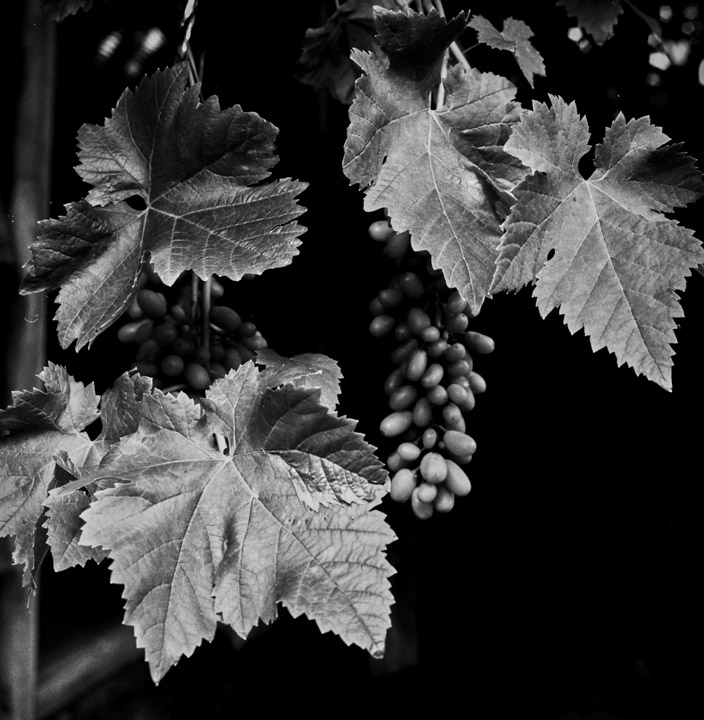
I don’t remember there being a hot shoe so you can use a flash trigger, so some modern sophistications will need a work-around but, as it is, this is a solid camera capable of giving good results.
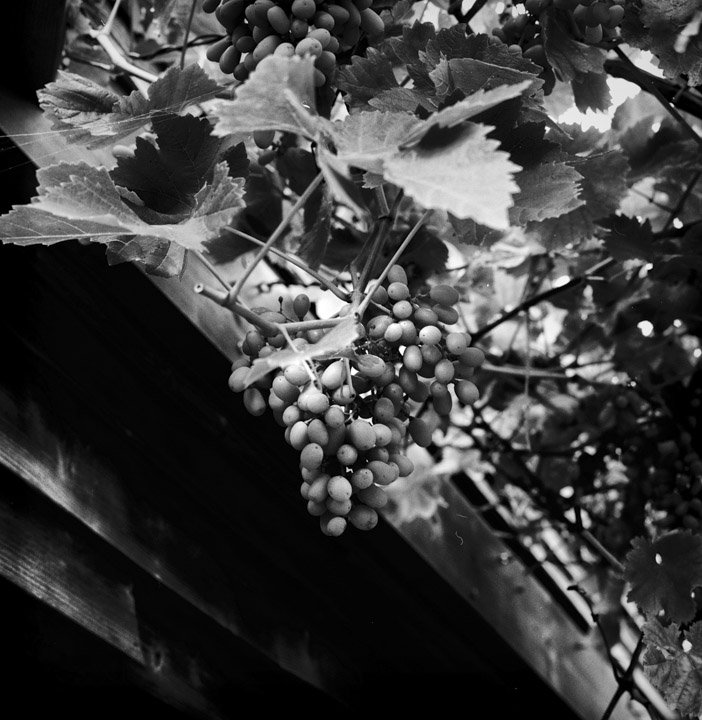
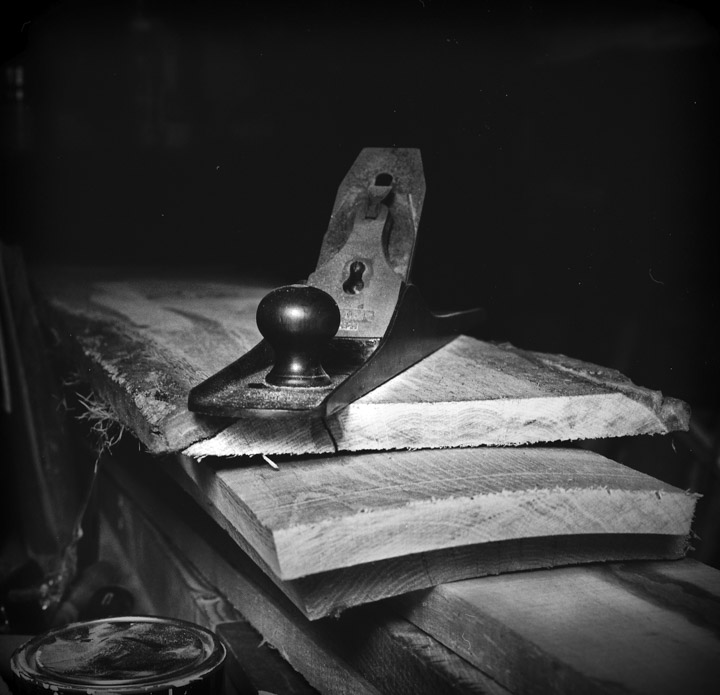
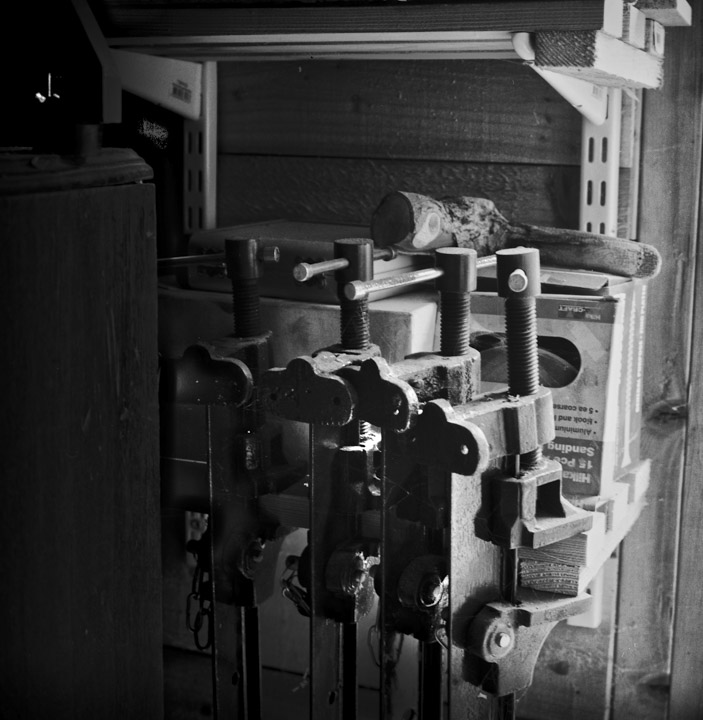
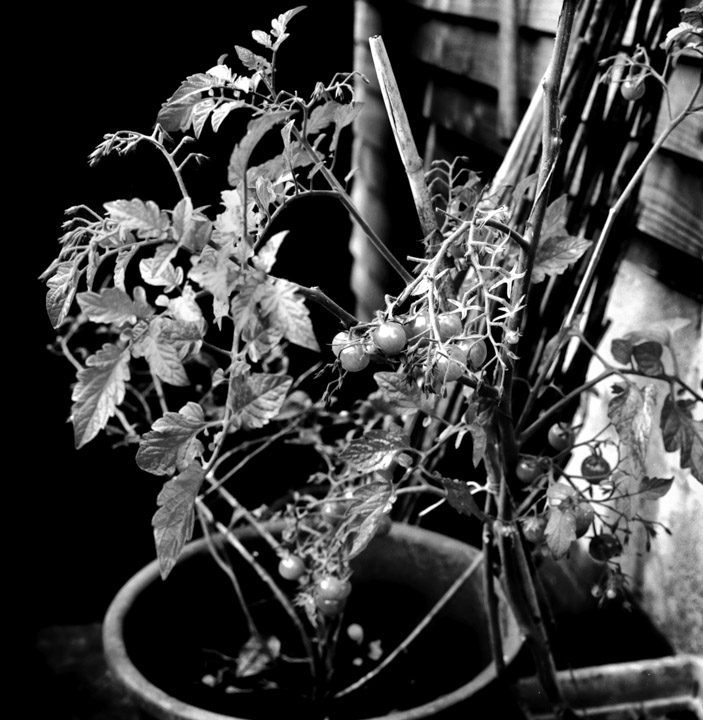
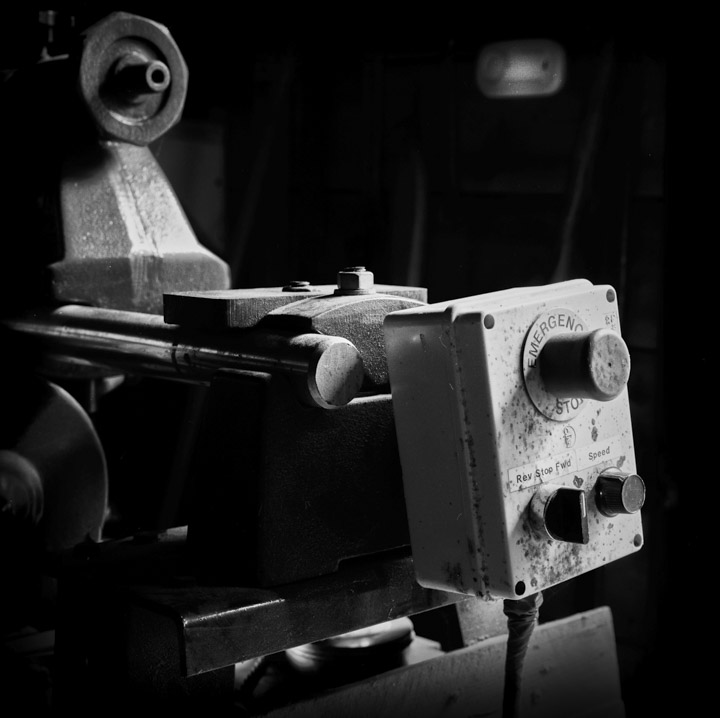
With all of the inclement weather, I didn’t go far to test the capabilities of the camera, I just went to my workshop which has a grapevine along one of its outer walls. Using what light I had, I wanted to achieve some contrast in the subject on a somewhat flat looking day, with slow shutter speeds and fairly close working, although outside the 70cm or so that the 80mm lens can manage. An intermittent breeze made outside shots a slight challenge, shooting at 1/30th sec. I used a spot-meter to assess my aperture and speed settings. The film was FP4+ and I developed the film at box speed using Ilfosol 3. All the negatives were good with the exception of one where, in low light, I mistook the 2sec. setting for 1/2sec and I was 2 stops underexposed.

I often come to the conclusion that this or that camera is a joy to use, particularly when it is relatively unfamiliar and the challenges of learning to use it provides me with something to get my teeth into, as it were. But the Bronica is not unfamiliar and I felt like I had never stopped using one over the decades since I last did. So there was no challenge – as I say, it is easy to use, but it is also so effective and good to use, I wonder why I sold it in the first place. Anyone who owns one or chooses to buy one will not be disappointed even if it doesn’t have the cache of other increasingly expensive and fashionable brands.