Leica iiia review by Richard de Bulat
I have been using the Leica IIIa for several years – it is the first Leica I bought; the Leica under review had, at some time, been upgraded to a IIIf, but the self-timer switch that was fitted has come off leaving a short spike.This did not prove to be a problem in use.
Ordinarily, this camera would be paired with a Leica Elmar lens, but I chose to use a 50mm f1.8 Canon LTM lens, which is the lens I use with my own camera, as I think it gives superior results.
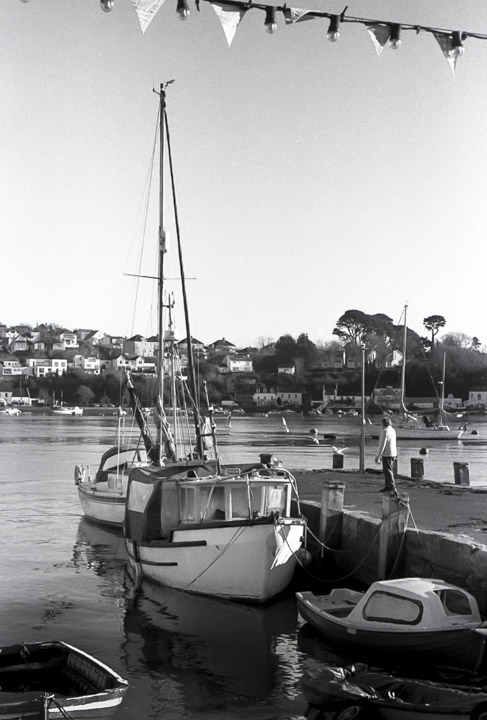
I took the camera over to Saltash, walking over the bridge and loaded with Kentmere 400.The day, contrary to expectations, was incredibly sunny and I found myself having to stop down to f11 with a shutter speed of 1/500 sec.Actually, this was okay and it helped me see another aspect to this low contrast film, on a naturally contrasty day and discovering that the film has a wide exposure latitude offering much better shadow detail than I would normally expect.If I have one criticism it is that the film emulsion is easy to scratch and I had to make more repairs to the images than I ordinarily do with other Ilford films.
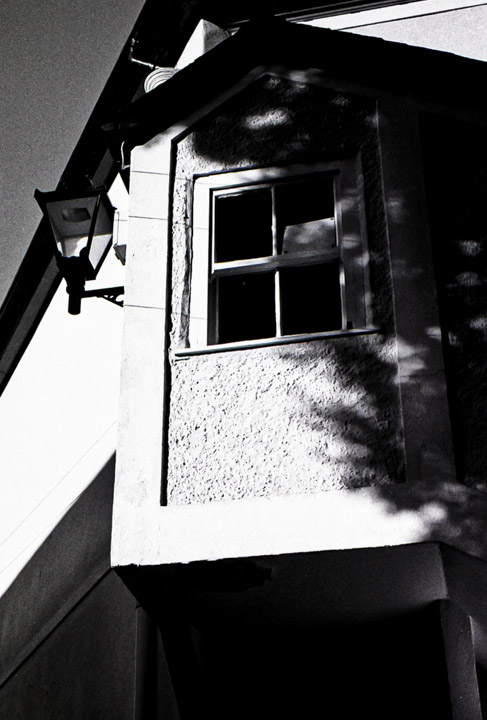
The Leica, as you would expect, is a joy to use; you have to cut a longer tongue in the leader end of your film stock, initially, but even so,I got 25 usable frames from a 24 frame film.The camera is a range-finder with two windows, one for focus and the other for framing.Focusing is accurate, meaning the rangefinder is good and framing is what you expect from a rangefinder camera, which is to say, the frame you expose is usually a little wider than you expect; regular use helps you frame more accurately and there are compensations to this system if you are framing moving subjects as in the case of street photography.Focus acquisition is fast as you have a small lever on the lens rather than having to twist the lens barrel.The camera and lens combination produces pretty sharp results baring in mind the 400ASA film stock and development in Rodinal 1+25 and I was pleased with the overall resolution.
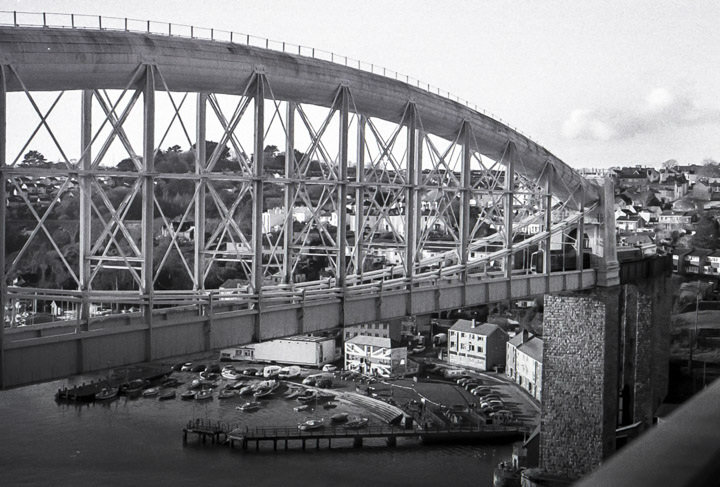
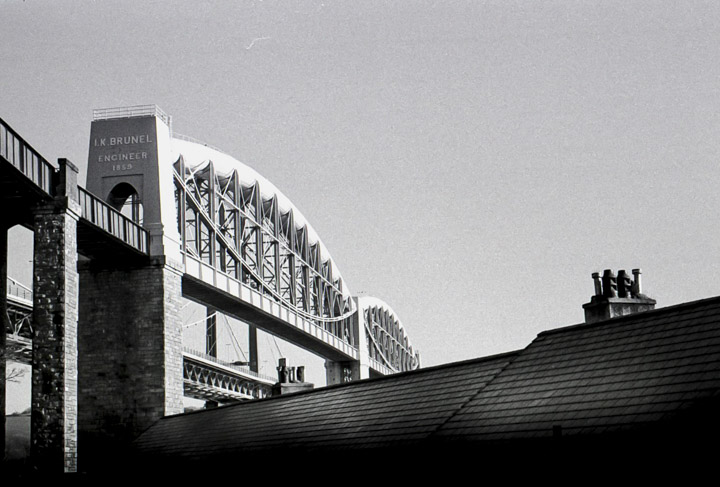
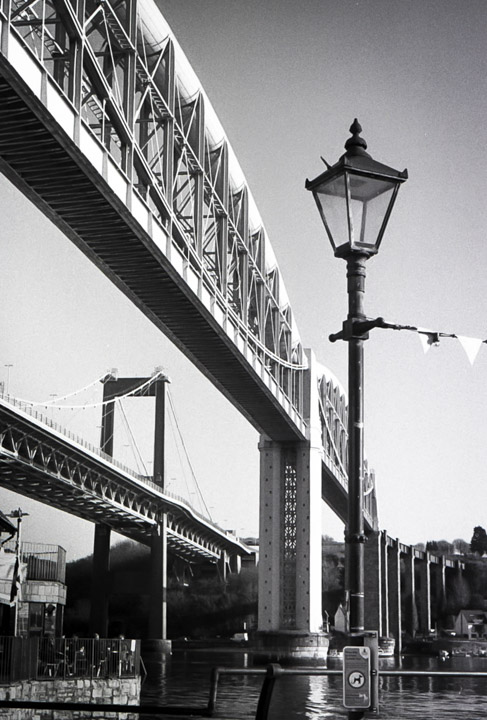
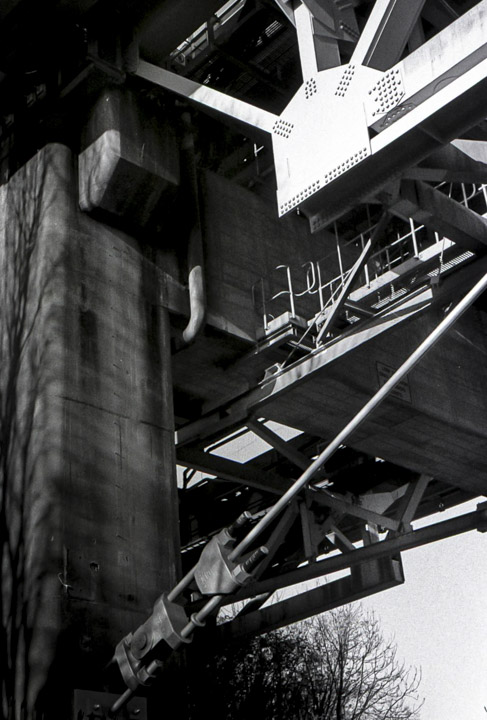
Obviously, the road and railway bridges dominate this particular area of Saltash and figure in most of the shots; they do make for a strong geometry in the images with a surprisingly high level of contrast that I boosted somewhat in Lightroom.The brightness of the day meant that I made few adjustments to my original settings, but changes to aperture and shutter speed is straightforward, providing you remember to wind on and cock the shutter before making changes to the shutter speed; anyone familiar with series III Leica’s or the old Soviet era range-finders will be familiar with this requirement.
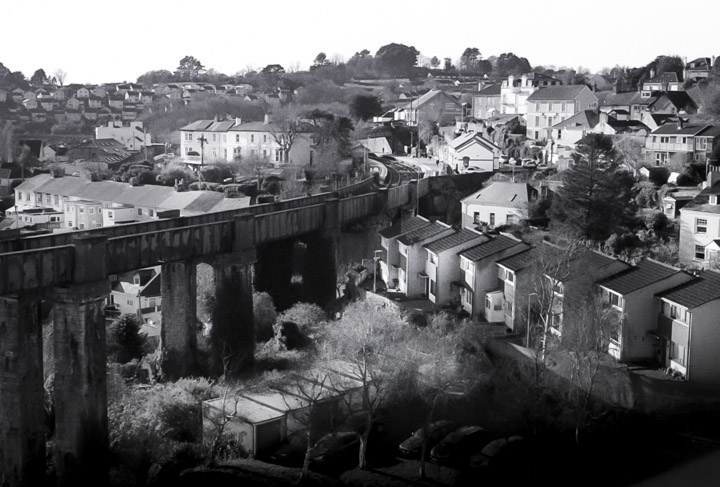
Spacing between negative frames is even, but slightly tighter than is the case with conventional SLR’s probably due to having a longer leader and squeezing in an extra frame or two depending how you wind on the film at the start.Loading the film is a little different than with an SLR – you remove the base plate rather than the whole back, lift out the winder spool and fit the long leader end into a sprung clip on the winder spool, fit the cassette, leader and winder spool into the slot at the back and you are ready to wind on.You can refit the base plate right at the start, ensuring the rewind knob on the left of the camera moves as you wind on the film.Rewinding, is also different: there is a small lever on the right side of the top plate, move it into position “R” and lift the rewind knob on the left hand side of the top plate to comfortably turn it in the direction of the arrow until you hear the film wind off the spool.By the time you have done this 2 or 3 times, it becomes second nature.
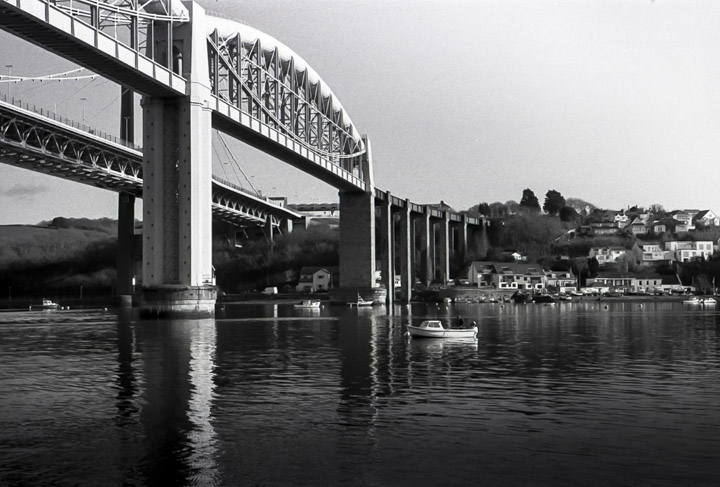
There is something to be said about owning and using a Leica camera – there are all superbly engineered and all but hand made and certainly put together, individually, by a Leica engineer.Using a series III Leica is most often a conversation piece and it is rare when I don’t engage in a conversation with someone or other when out and about.Using a camera such of this is to use a piece of history, that the results are so good is a marvel of engineering.Using this camera with an original Elmar lens is okay, but if you you choose to get a Canon lens, you will be in good company; this is the set-up Robert Frank used to shoot “The Americans” a book almost as famous as the camera itself.