Leica llc by Richard de Bulat
Obviously Leica’s are special; virtually handmade and beautifully engineered, with incredibly good lenses, although, take note, some lenses are better than others. For the purposes of this review, the camera body was matched with a 5cm Summitar F2, which is a good lens and probably worth more than the body itself, but then lenses make photographs.
As with all Barnack Leica’s, you have to cut a 10cm tongue in the film leader, which is not difficult, using a pair of sharp scissors, unless you have the purpose made cutter. After that, loading the film is not too challenging and you can tell it is all in place as the rewind knob turns after the first couple of frames are wound into the camera. At the end of the roll, there is a switch that you change from A to R to enable the rewind and everything works as smoothly as silk.
A slight challenge you will face, initially, is when you focus and then frame your shots, using the two small windows on the left side of the camera. These are set alongside each other making the move from focussing to framing very fast but, nevertheless, it takes a little bit of getting used to. Using the 5cm lens, framing is pretty much spot on and what you see in the viewfinder is very close to what you get on the exposed negative, which is not always the case with a rangefinder camera. It has no slow shutter speeds, so the slowest shutter speed is, I think, 1/8th sec. For a walk around street camera, this is not really a problem, but if you need slow speeds, choose another model.
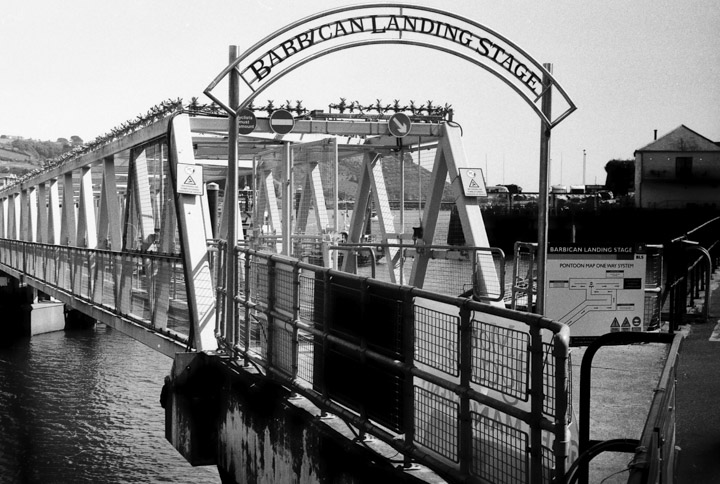
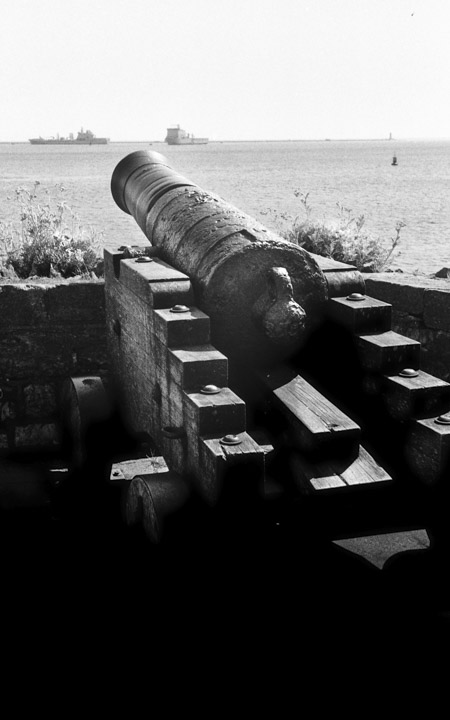
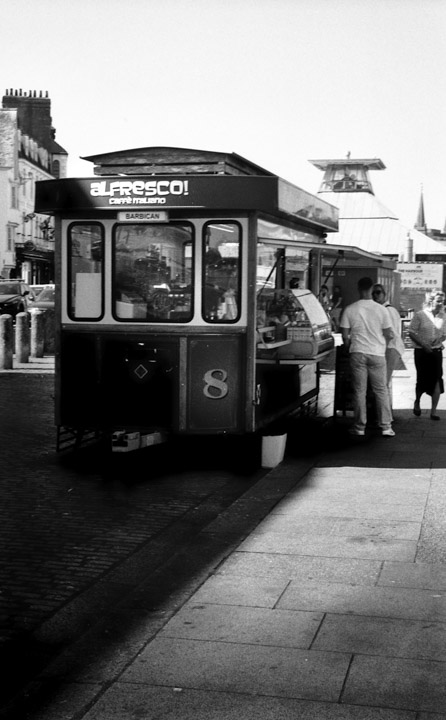
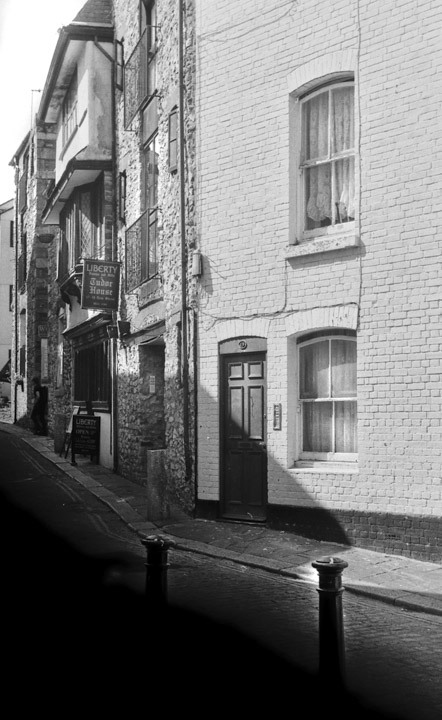
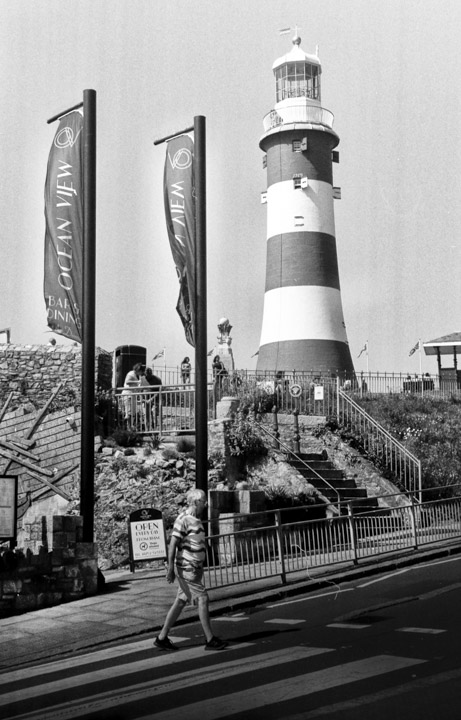
I took a walk from Millbay, around West Hoe and on to the Barbican during the afternoon for strong raking shadows, with Agfaphoto APX 100 which I developed in Rodinal. APX is not the most contrasty film, but on days of exceptionally bright light and deep shadow, it is probably a reasonable choice.
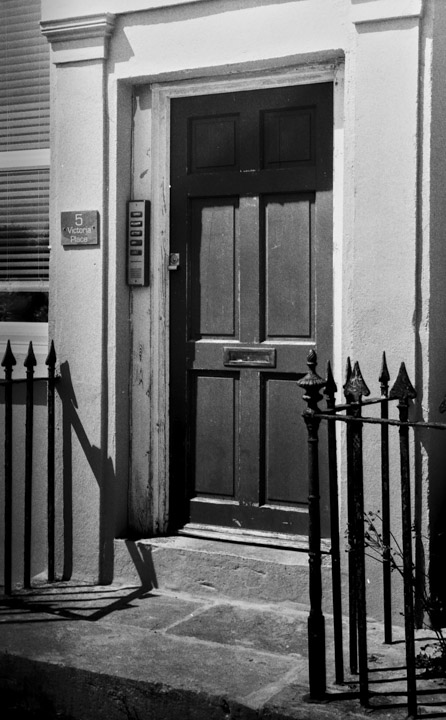
The Leica IIc has a good weight and balance in the hand. I used it with a carry case for convenience, but you have to be careful to make sure that the bottom section is kept away from the lens, particularly in portrait mode when it can easily flap across the lens without being noticed; a long strap slung across one shoulder or a wrist strap is the safer option, when out an about, then using a case for storage
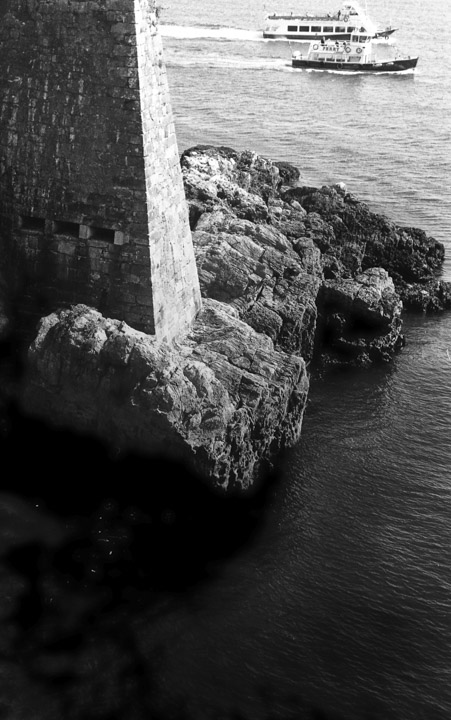
I like Leica’s for all sorts of reasons – I like rangefinders, generally. Providing that they are well serviced, Leica’s work like a dream, they are quiet and fairly unassuming, for the most part. Good glass, helps to make photographs that have a particular look that does not rely on heavy processing, but is achieved right out of the box, as it were, which is why they were so popular with professionals back in the day. Nowadays, the Leica look is probably not as pronounced since almost all modern lenses are capable of producing high contrast images and good fall-off. However, if you are looking at vintage, analogue cameras – this one dates back to 1948-51, or thereabouts – you will find Leica among the best on the market and this IIc is no exception to this fact.
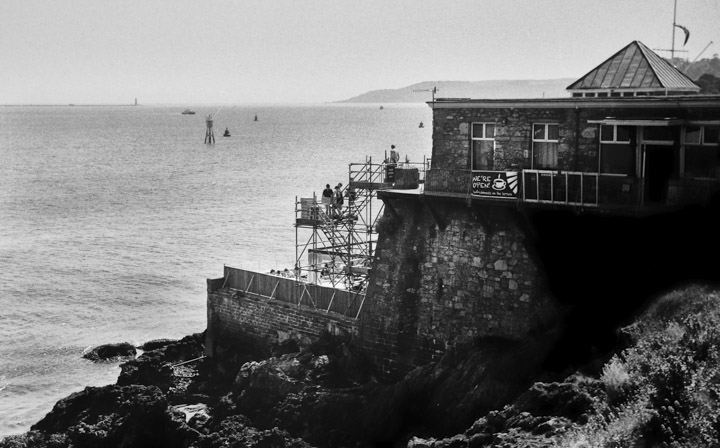
Getting the best out of the Leica or any analogue camera, for that matter, means knowing how to use it well and to the best advantage. If you are new to analogue photography, learning the basics of loading film and setting the speed and aperture controls is best done via some short training sessions, including a walkabout. Learning how to develop your own film is also a good idea, if you want to get the best image quality.