
A trip out with the Rolleiflex 2.8F with Zeiss Planar 80mm f2.8
A confession before I begin my tale. This is not Russell’s Rolleiflex 2.8F, but its twin. Both came into the shop at the same time, I’ve always wanted a 2.8F, both were immaculate when I checked them but mine came with a lens hood and caps. Lockdown has made logistics difficult! My meter doesn’t work, neither does his.
I’ve been pounding the same streets and sights for the last five weeks, feels like ten, and a change is as good as a break. The first and fantastic difference between this gem of post war German camera and optical engineering and the 35mms I’ve been trying out is not the number of lenses, wonderfully baroque though they may look, but that viewfinder, 6x6 cms of wondrous image, initially a little dark but hold it right, at stomach level, the waist level finder had no joy with mine, and focus, then the subject snaps into focus. For those of us of more aged eyesight it is a joy, and if you need further confirmation, the loupe does the trick.
Of course, composition is reversed. Point it leftwards and the image goes the wrong way. Remember what you want to photograph is reversed, and it sort of makes sense, unless you’ve done it before, in which case, you wonder why you bother with prisms.
Look down and you see aperture and shutter information clearly displayed. If the meter worked you’d see the needle move as you click the aperture or shutter speed dials, clearly visible either side beneath the viewing lens. Using my normal spotmeter, it’s off on the hunt, in the first instance, large prawns.
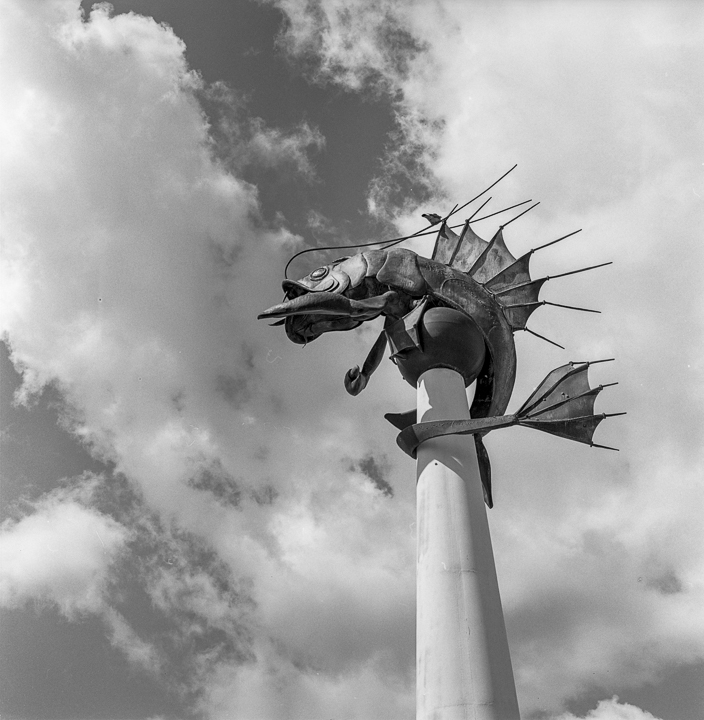
Hey, it was sunny and the clouds looked nice. I decided hunting for arty stuff was pointless, let’s just enjoy the views and the day, and let the resolution of that glorious Planar speak for itself, as much as anything compressed to 720 long edge can possibly be!
The back streets of the Barbican were attractively empty, rather like the main drag. Horrible for the shops and pubs, but I leave the social realism to others this day and surf the solitude.
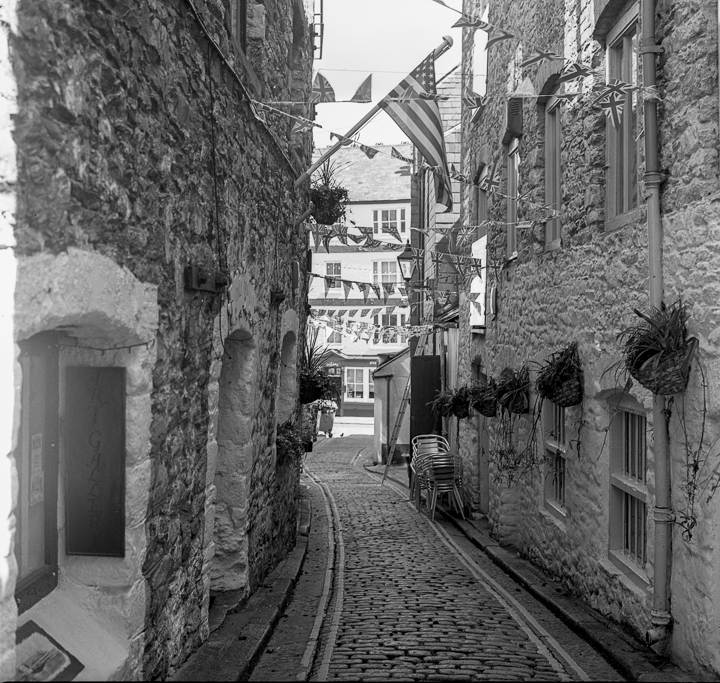
With a roll of 12 and Russell wanting 8 of them on this review, they’ve got to count. The first medium format photo I’ve ever taken of the Old Customs house on the Barbican without anything, vehicles or people, ruining the view.
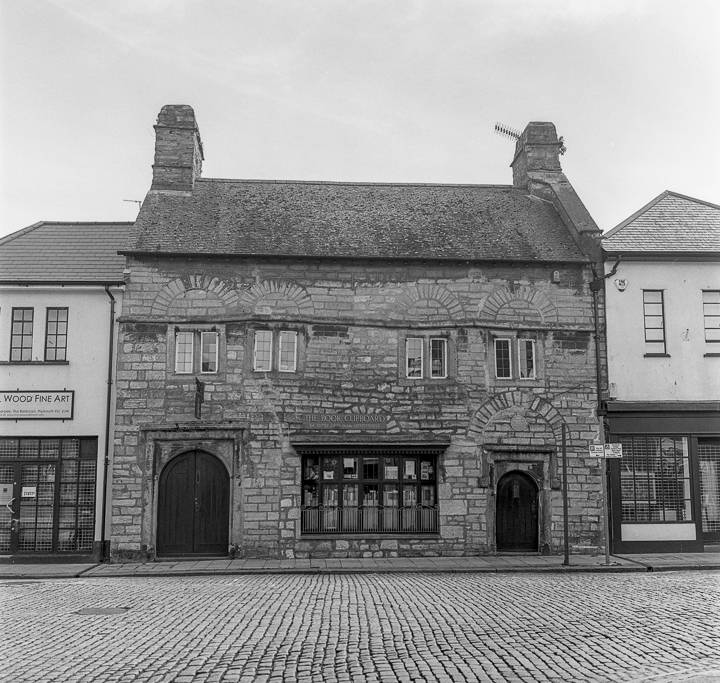
Those of you who’ve had a Rolleicord like me will notice instantly that the Rolleiflex 2.8F is rather heavier - a lot heavier, and somewhat larger. But once it’s around the neck on a good strap, it rests nicely on the stomach and is soon forgotten. It gets a lot more attention as a camera though, thank heavens for social distancing!
The Citadel, as always, picturesque, the Sally port nicely sculpted in the southerly light.


At the rate Smeaton’s Tower’s scaffolding is coming down they’ll struggle to have it ready for the 500th anniversary of the Mayflower
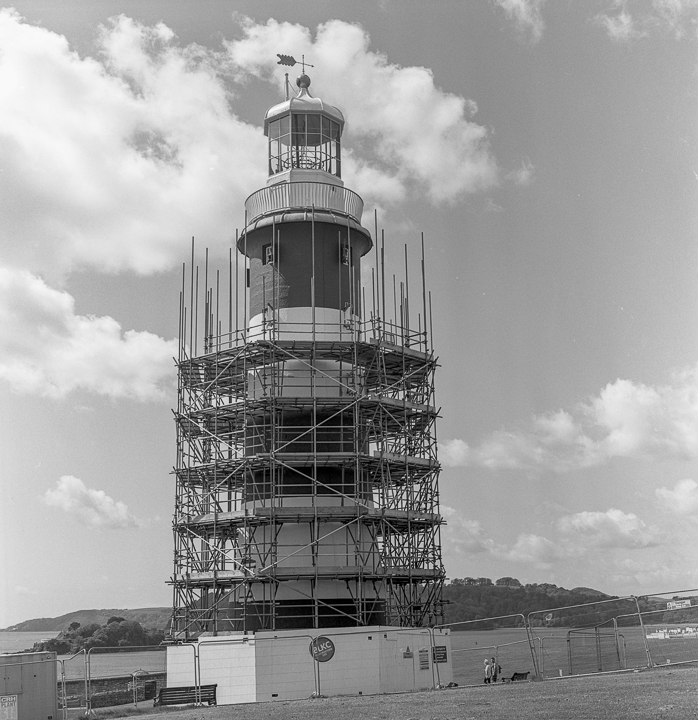
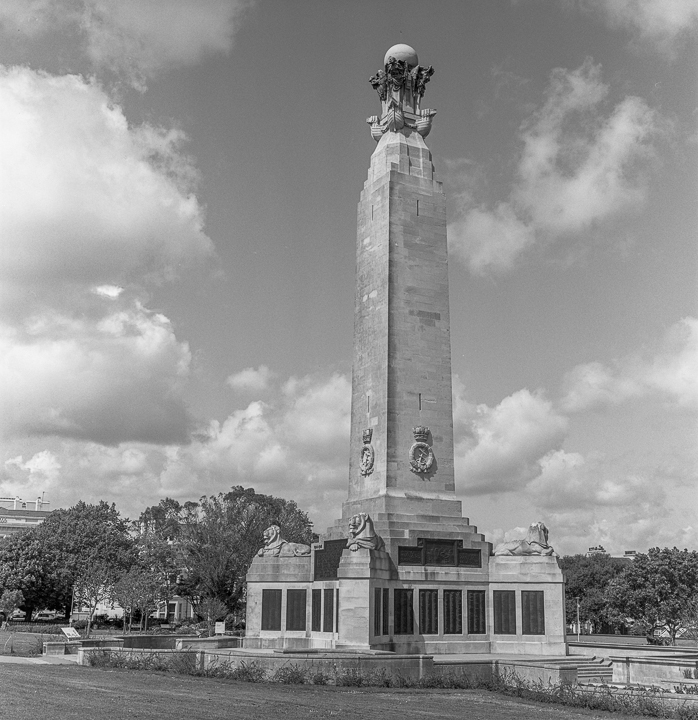
So, towers and square images, surely the 35mm format is better? Not really,
you can fit it all in and the base, and the skies, clouds and surroundings. If
you want to there is so much image you could crop if you wish. Medium
format, pure luxury!
Right, static targets are all very well, what about some street photography?
The light has been metered, no need to fiddle with the controls and focus is a
doddle on that screen.
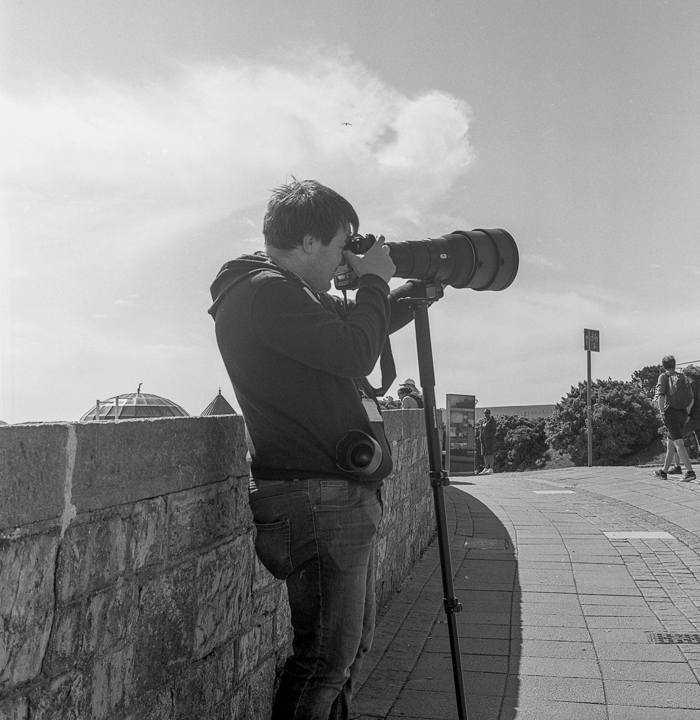
Fortunately my target was preoccupied with showing off his large appendage and the sound of his shutter fired in 100 shot bursts was eerily similar to that of Israeli submachine guns! Digitalist...A gentle click of the shutter and this horribleness is captured for eternity.
This Rolleiflex is a beautiful camera. It exudes the quality that its makers intended. It works ergonomically and is fun. It’s expensive, but for what it is, a bargain. It makes you work differently, not slowly, but with that wonderful viewfinder the composition can be more serene, more considered. The shutter fires with a nice click, but nothing to frighten the horses. You wind on the film with a tactile lever, then turn it back half a rotation. Keep that finder up for quick use and it’s a street camera.
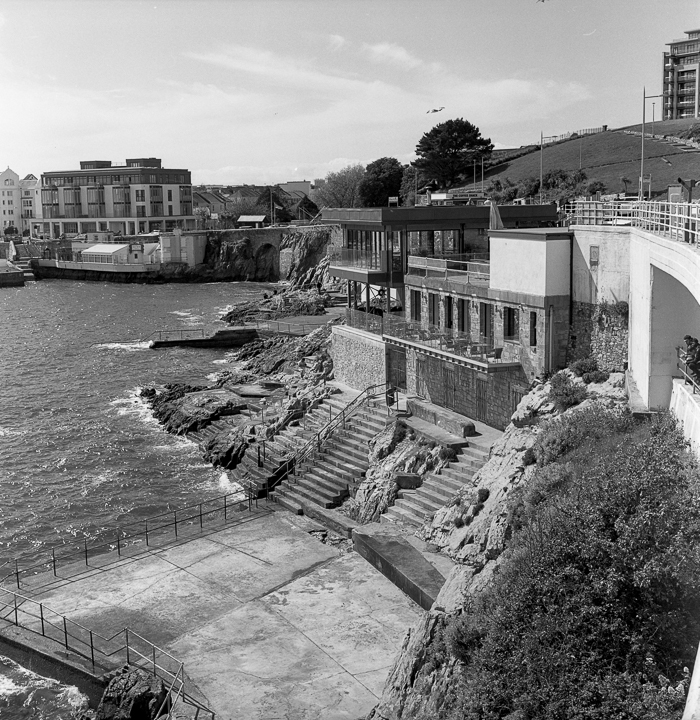
Finally, number 9. The Hoe was glorious in the sunshine, and hardly a human to be seen. I took this over the parapet and remembered when there is an obstacle in the way, your viewing lens can see something your taking lens might not. One of the reasons the Twin Lens Reflex died a death, but what a life. It’s a unique experience, one I wouldn’t miss for the world.
I’m charlesdamorgan on Instagram and I shot these on Kodak Tmax400 at 250 and developed them in PMK Pyro 1+2+100.
Pop over and check out our TLR camera's and also keep a look out for our next camera review


