
Mamiya RZ67 Pro ii by Richard de Bulat
I took the Mamiya RZ out for a test run. I own an RB 67, so I imagined that it would be a similar experience using the RZ, which it is, up to a point. Both cameras are great; the RZ came fitted with a standard 90mm lens, my RB has another standard lens, but 127mm and both lenses are also great. But, there are differences, not least the fact that the RZ at almost a kilo lighter, is a good deal easier to lug around; at 2,6 kilos it is no light weight, but has a good balance and I would have no problem shooting hand held with it, if lighting conditions permitted. As it was, however, lighting conditions did not permit as daylight was generally grim and I made several night shots using a tripod throughout.
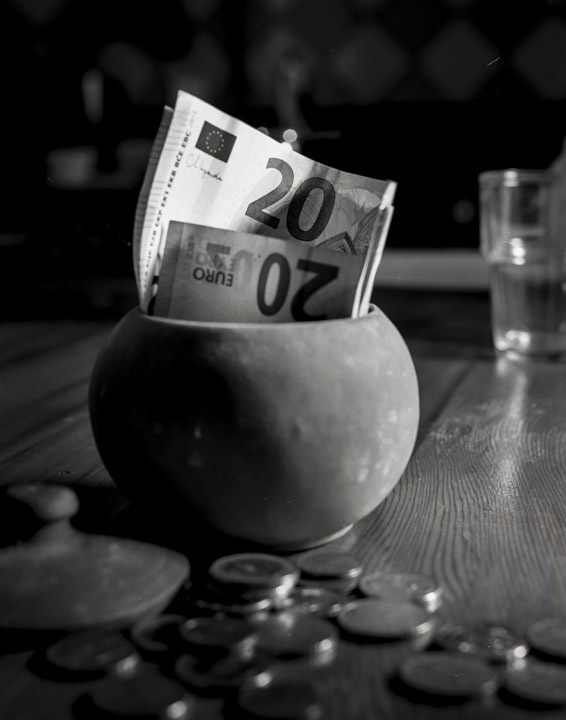
In using the camera I have tried to cover a wide range of usages over the ten frames of Delta 400 that I used – night, studio, grab shot, landscape and portraiture, to show the versatility of the camera with the single 90mm lens. I start with the portrait because the lens performs very well since I shot it wide open at f3.5; detail is good as is fall-off as the image transitions from sharpness to softness across both image and tonal range. Some people would want to reach for the 110mm lens for portraiture which gives you have a stop more aperture and asks you to dig very deep to afford it, but in terms of actual performance, particularly in monochrome, I think you would be hard pressed to tell the difference; the 90mm is a very good lens.
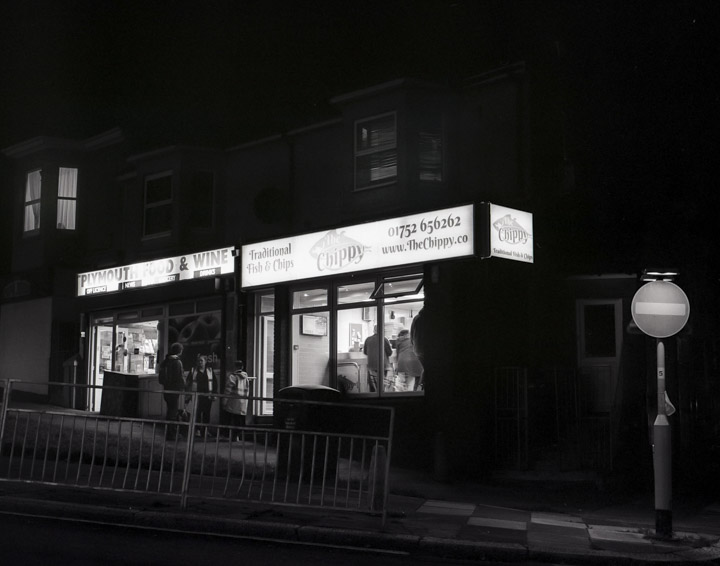
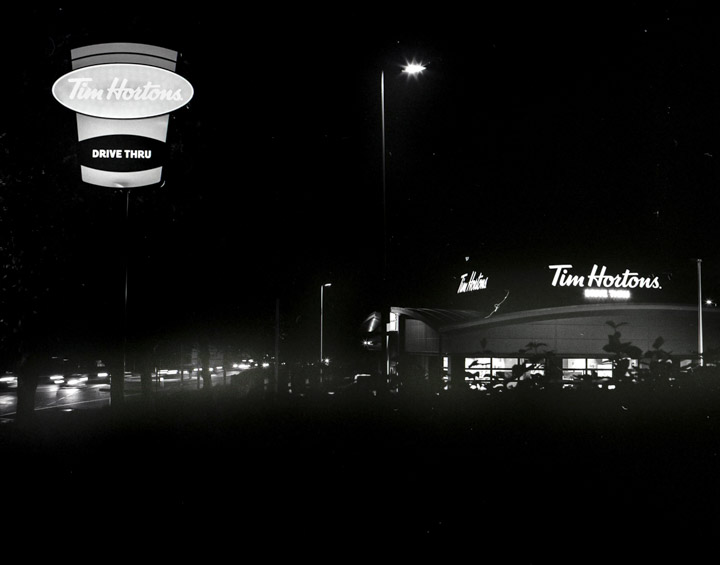
I took a spot-meter with me for the night shots just to make sure I didn’t blow the highlights and to allow the night sky to be properly black. Shot at 1/8th sec at f5.6 I expected a bit of motion blur from people in the shot, but for the most part they remained stubbornly static. Since I was taking 1 shot per subject there was no room for experimentation and in ordinary circumstances you might shoot a whole roll or more depending on what you what you were looking to achieve.
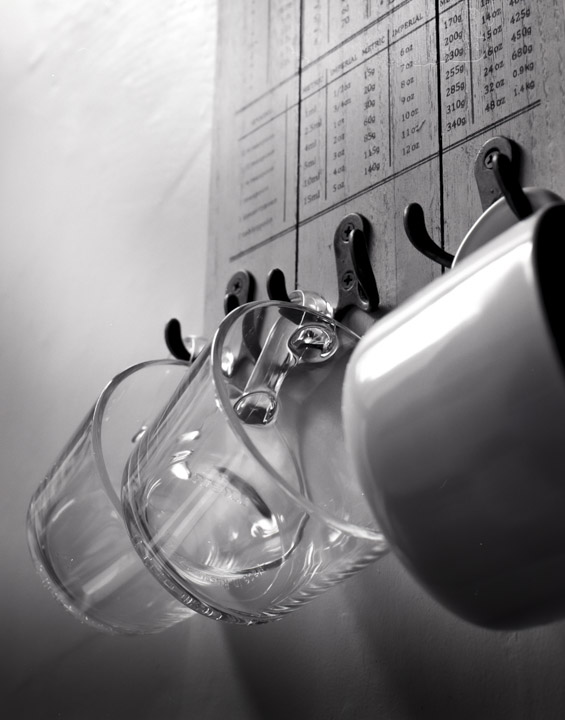
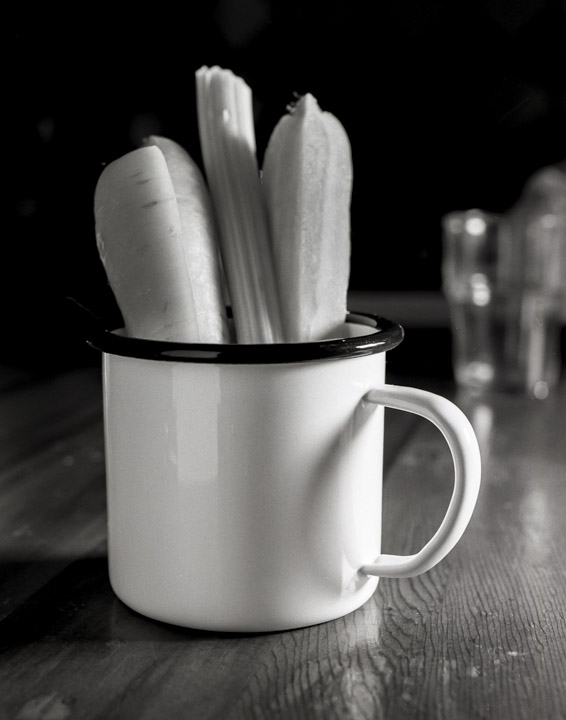
What I am calling studio shots were, in reality, some still life set-ups which show the advantage of having a bellows when it comes to taking close-ups. There is a scale on the right side of the camera that helps you to match the lens used and exposure compensation as the bellows extends beyond the focal length of the lens: shot at f11, I use between a half and full stop of compensation to get correct exposure. The focus screen on the RZ is considerably better than the one I have on my RB and this is of particular help in low light and close working, as in this case; additionally, f11 on a 6x7 does not give great d.o.f at short distances so you do need to choose your point of focus with some care as a lot of the image will be soft to completely out of focus. Interestingly, there is good bokeh on the highlights, if you want that. The tonal range you can get using the RZ is very good; you can get great contrast in the light and dark areas of the frame with a delicate subtlety of tone in between, making this a superb studio camera. The photo of the cups hanging up was a grab shot that I noticed; only the centre of the frame is in focus, but the detail and tones across the frame works to good effect, I think.
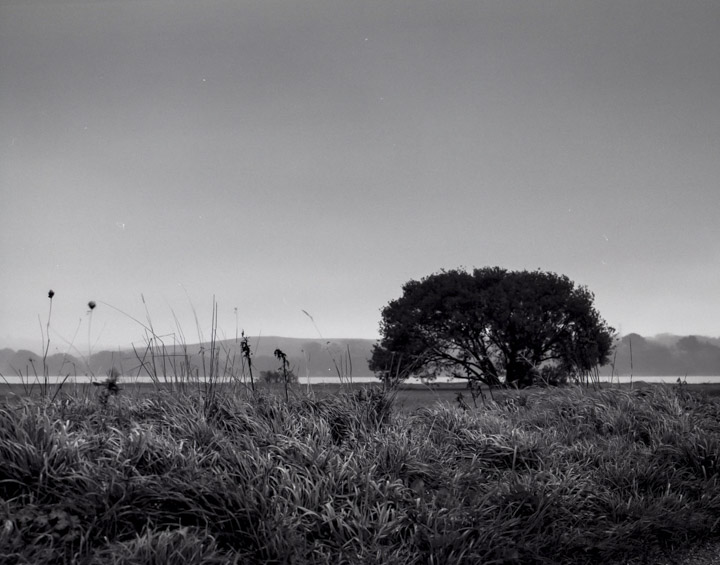

The last shot taken at f8 1/30th sec in the rain and wind had a mist hanging over the background with the potential to make the overall shot very low contrast, but detail in the foreground is good and the 6x7 format in landscape makes this a good choice for landscape work, generally. The RZ is, undoubtedly, like the RB, a great work-horse of a camera. I have to add that I think that it is better than the RB if only in terms of weight, its focus screen and, since it is electronic, the smoothness of its operation. Nevertheless, I won’t be changing my RB any time soon, although it wouldn’t distress me too much to do so.

6x7 is a good format – the revolving back of the RZ, (ditto RB) makes it as easy to use as a 6x6 in that the camera itself can remain static and it is a more logical format since some subjects are naturally portrait or landscape in orientation. The sheer size of the negative ensures good detail, assuming it has been well exposed and the resulting image will be of high quality: the RZ is in every way a professional camera. Do I like it – No – I love it!
Click to view this camera and our other Mamiya cameras


